The Hunt You Can Hold in Your Hands.
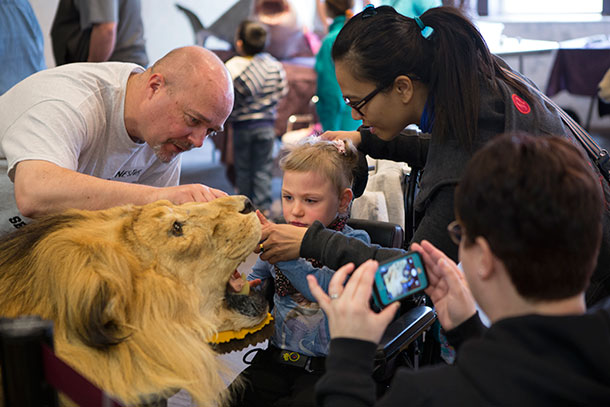
Sensory Safari brings full-mount and full-skin big game animals to visually impaired participants who’d never otherwise be able to experience them. They feel the curl of a sheep’s horn. The texture of a zebra’s hide. The weight of an elk’s antler.
A Program Unlike Anything Else We Do
Sensory Safari is a signature program of SCI Foundation, run by volunteers and chapters across the country. The premise is simple: bring real big-game taxidermy and tanned skins to schools for the blind, retirement communities, veterans’ hospitals, and other audiences with visual impairments — and let them experience the animals through touch.
For most participants, it’s the closest they’ll ever come to a Cape buffalo, an African lion, a North American moose, or a Dall sheep. They run their hands across the texture. They feel the scale. They hear the stories from the hunters who brought the animals home.
It’s quiet, intimate work. And it lands harder than almost anything else this chapter does.
How a Sensory Safari Comes Together
Step 1 — We Bring the Mounts
Chapter members loan their taxidermy and skins to the program. Each event features a curated selection of species, often from multiple continents.
Step 2 — We Bring the Hunters
Volunteers from our chapter staff every event — telling the stories, answering questions, guiding hands, talking through what each animal is and where it lives.
Step 3 — We Bring the Quiet
The events are unhurried. Participants take as much time as they need. Some come back to the same mount three or four times.
Where the Program Goes
Our chapter has run Sensory Safari programming at schools, libraries, veterans’ facilities, and community organizations across East Ohio and Northwest Pennsylvania. If you represent a school for the blind, a retirement community, a VA facility, or a similar organization and would like to bring Sensory Safari to your group, contact the chapter.
Want to bring Sensory Safari to your group?
Events are scheduled in coordination with the chapter board. There's no charge — the program is funded by chapter members and supporters.